

Forensic Handwriting Analysis
Tigerlily Taylor, CFDE
Certified Forensic Document Examiner
Forensic examination of questioned handwriting, signatures, and documents for legal, financial, and personal matters.
What Is Forensic Handwriting Analysis?
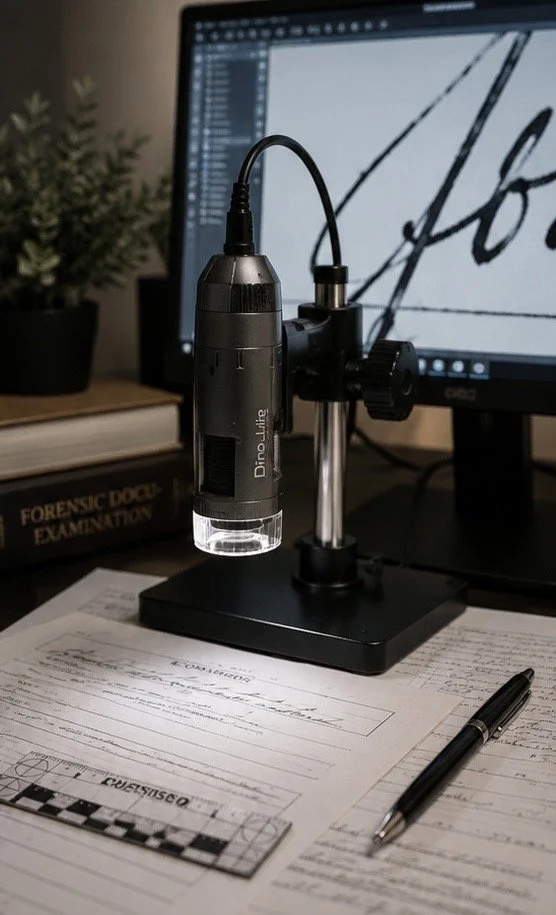
Forensic handwriting analysis is the examination and comparison of handwriting to assess authenticity, identify authorship, and evaluate questioned documents.
It is commonly used when a signature, handwritten document, or written entry is disputed and may have legal, financial, or personal significance.
Unlike informal handwriting opinions, forensic handwriting analysis relies on recognized examination methodology, comparative analysis, and documented findings developed specifically for evidentiary purposes.
How Does a Forensic Handwriting Examination Work?
2
3
4
5
Review the Questioned Document
The questioned handwriting, signature, or document is reviewed to identify the issues requiring examination.
1
Obtain Known Writing Samples
Verified writing samples are collected for comparison purposes.
Compare Handwriting Characteristics
Letter formations, line quality, spacing, rhythm, proportions, connecting strokes, and other characteristics are evaluated.
Assess Similarities and Differences
Observed characteristics are analyzed to determine whether evidence supports or contradicts common authorship.
Develop Findings
Findings are documented based on the available evidence and the results of the examination process.

Can AI Analyze Handwriting for Legal Cases?
Artificial intelligence can identify visual patterns in handwriting, but it cannot perform a forensic handwriting examination.
Forensic document examination requires evaluation of writing movement, line quality, natural variation, and document characteristics using methodology developed specifically for evidentiary use.
While AI may assist with pattern recognition, it cannot replace professional forensic examination, provide expert testimony, or defend conclusions under scrutiny.
Forensic handwriting analysis is often sought when the authenticity of a document may influence significant legal, financial, or personal decisions.
Nationwide Service • Independent Examination • Formal Reporting • Confidential Review
Matters Commonly Referred For Examination
-
Estate & Probate Matters
Contested wills
Trust disputes
Beneficiary challenges
Probate litigation
-
Questioned Signatures
Suspected forgery
Contract disputes
Settlement agreements
Financial documents
-
Property & Authority Documents
Deeds
Power of attorney documents
Real estate disputes
Authorization forms
Why Certification Matters
When authenticity is questioned, conclusions should be supported by recognized methodology, documented findings, and professional forensic examination.
Begin Your Confidential Review
Every matter entrusted to the practice receives the kind of attention that can only come from a highly personal approach.
From the first point of contact, the experience is discreet, attentive, and thoughtfully guided. Each stage is handled with the same level of consideration—creating an experience as refined and personal as the forensic work itself.
Your confidential review is where that relationship begins. Once your inquiry is received, our office will personally review the details of your matter and reach out to learn more about what you need. From there, we will recommended the appropriate scope of examination and prepare a private proposal tailored to your matter.