

Forensic Handwriting Expert for Attorneys
Tigerlily Taylor, CFDE
Certified Forensic Document Examiner
Litigation-focused forensic handwriting analysis for attorneys handling questioned signatures, disputed wills, trust contests, deed disputes, contract matters, and forgery allegations nationwide.
Forensic Document Examination for Litigation
When document authenticity may affect the outcome of a case, early forensic review can help determine whether the evidence supports further examination, written findings, or expert consultation.
Tigerlily Taylor, CFDE, provides independent forensic handwriting and document examination services for attorneys handling disputed signatures, questioned documents, and suspected forgery matters.

Common Matters Referred by Attorneys
Attorneys often seek forensic handwriting and document examination when the authenticity of a signature, handwritten entry, or questioned document may influence the outcome of a dispute.
Contested Wills & Trusts
Financial Document & Check Fraud
Estate & Probate Litigation
Forgery & Document Alteration
Deed & Real Estate Disputes
Handwritten Amendments & Notes
Contract & Business Disputes
Authorship Identification Matters
Independent Forensic Insight
Forensic handwriting examination for attorneys handling questioned signatures, disputed documents, and authenticity-related matters.
Factors That Influence Examination Strength
The available evidence plays an important role in the strength of any forensic handwriting examination. The following factors are commonly considered during the evaluation process.
Document Quality
Known Writing Samples
Writing Quantity
Identifiable Characteristics
Originals vs. Copies
Document Condition
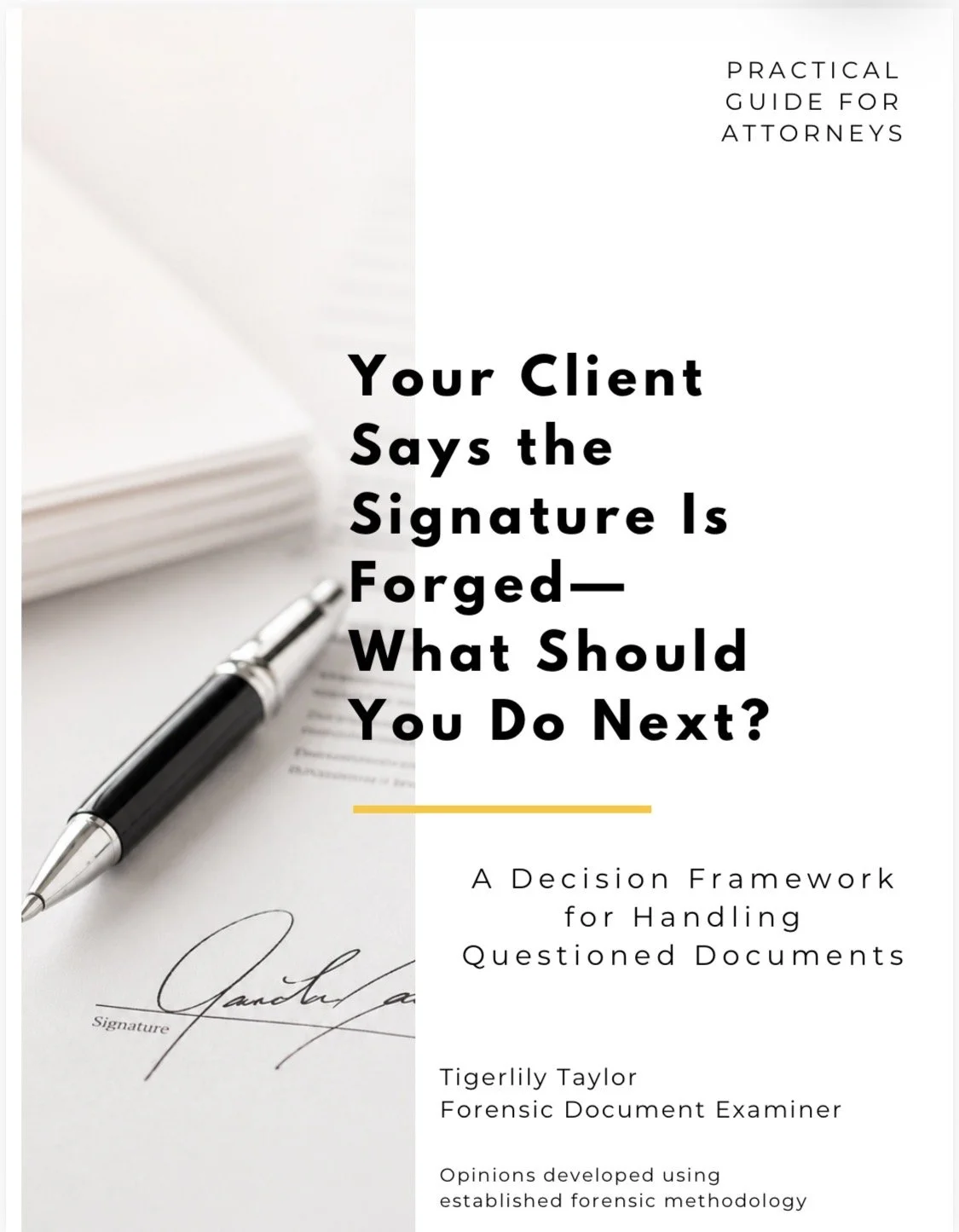
Your Client Says the Signature Is Forged—What Should You Do Next?
A practical guide for attorneys handling questioned signatures, disputed documents, and potential forgery claims. Designed to help evaluate evidence, identify common pitfalls, and determine when forensic analysis may be appropriate.
Attorney Decision Framework
Common Engagement Types
Begin Your Confidential Review
Every matter entrusted to the practice receives the kind of attention that can only come from a highly personal approach.
From the first point of contact, the experience is discreet, attentive, and thoughtfully guided. Each stage is handled with the same level of consideration—creating an experience as refined and personal as the forensic work itself.
Your confidential review is where that relationship begins. Once your inquiry is received, our office will personally review the details of your matter and reach out to learn more about what you need. From there, we will recommended the appropriate scope of examination and prepare a private proposal tailored to your matter.